BURATAI AND THE TRANSFORMATION OF THE NIGERIAN ARMY; A Legacy of Leadership, Courage and Service.

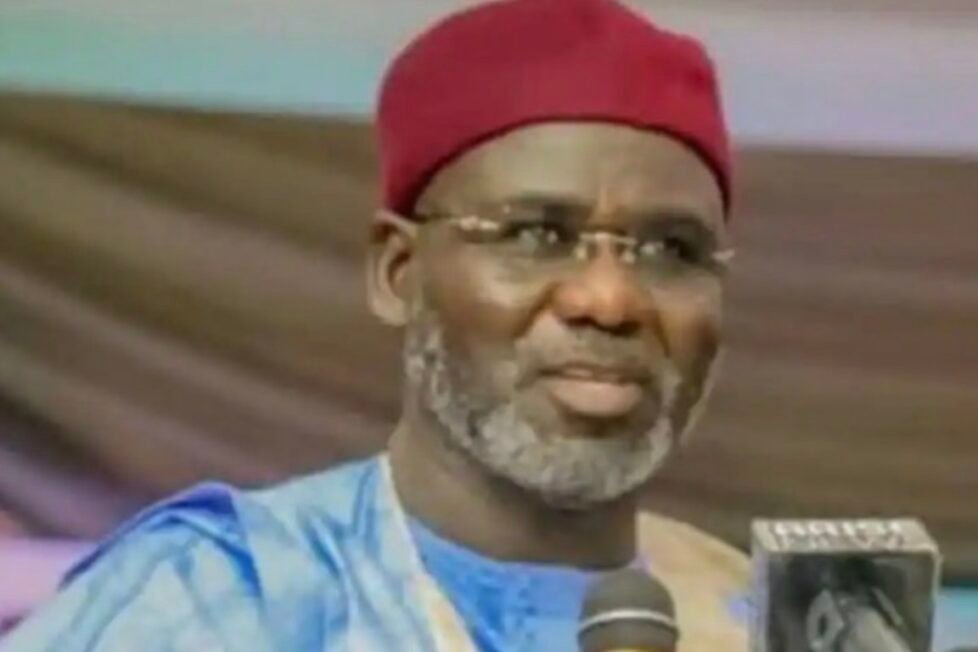

BURATAI AND THE TRANSFORMATION OF THE NIGERIAN ARMY; A Legacy of Leadership, Courage and Service.
By Comrade Oladimeji Odeyemi.
“Celebrating a Soldier’s Soldier and a General’s General.
There are moments in the history of an institution when leadership transcends the ordinary responsibilities of office and becomes a defining chapter in the institution’s evolution. For the Nigerian Army, the tenure of Lieutenant General Tukur Yusufu Buratai as the 20th Chief of Army Staff from year 2015 to 2021 represents one of such chapter.
General Buratai assumed command at a particularly challenging period in Nigeria’s history. The nation was confronting a determined insurgency in the North-East, while the Nigerian Army was required to simultaneously maintain its constitutional responsibilities across a complex and changing security environment.
It was in this demanding environment that General Buratai brought to bear his experience as a professional soldier, commander and strategist.
His approach was anchored on a simple but consequential principle: an army must continuously transform if it is to remain capable of defending a changing nation.
LEADERSHIP IN THE CRUCIBLE OF WAR.
When General Buratai became Chief of Army Staff in July 2015, the fight against Boko Haram was one of the greatest security challenges confronting Nigeria. One of his early initiatives was the re-designation of the counter-insurgency campaign as Operation Lafiya Dole, reflecting a renewed determination to restore peace and security in the North-East.
But the significance of his leadership went beyond the renaming of an operation.
The Buratai years witnessed a sustained effort to improve operational effectiveness, strengthen troops’ capacity and adapt the Nigerian Army to the realities of modern warfare. The campaign against insurgency increasingly incorporated intelligence, technology, surveillance, local capacity and more flexible operational approaches.
Under his leadership, the Army also pursued the use of drones, sustained initiative of the Nigerian Army Aviation and other technologies for surveillance and operational purposes, while encouraging research, innovation and technological solutions to military challenges.
This was an important recognition of a fundamental truth of contemporary warfare: courage remains indispensable, but courage must be supported by capabilities, technology, intelligence, logistics and training.
FROM FIGHTING WARS TO BUILDING AN INSTITUTION.
Perhaps one of the most important aspects of General Buratai’s legacy is that his vision was not limited to winning battles.
He understood that a modern army must build institutions capable of generating knowledge, developing its personnel and producing solutions to its own challenges.
This philosophy contributed to the establishment of the Nigerian Army University Biu, conceived as a platform through which research, innovation and technological development could contribute to solving operational problems confronting the Army.
That vision is significant.
An army that invests only in weapons prepares for today’s war.
An army that invests in knowledge, research, education and innovation prepares for tomorrow’s war.
General Buratai understood this distinction.
His tenure therefore helped strengthen the idea of a Nigerian Army that would not merely consume technology but increasingly seek to develop indigenous knowledge and solutions.
MODERNISING THE FIGHTING FORCE.
Transformation also requires equipment.
During General Buratai’s tenure, the Army embarked on the refurbishment of previously unserviceable equipments using its own engineering capacity. Such initiatives reflected a philosophy of self-reliance, local capacity and institutional ingenuity.
The Nigerian Army was encouraged to look inward—to use the knowledge and technical abilities of its engineers and to collaborate with indigenous companies in the production and maintenance of military equipment, such as MRAP etc.
For a developing country confronting sophisticated security threats, this represented an important strategic direction.
Military transformation cannot be achieved by purchasing equipment alone. It requires the ability to maintain, modify and, ultimately, develop capabilities suited to the country’s own operational environment.
THE SOLDIER AT THE CENTRE OF THE ARMY.
No military transformation can succeed without the soldier.
General Buratai repeatedly placed emphasis on the welfare and morale of officers and soldiers serving in difficult operational environments. His visits to troops in the North-East provided opportunities to engage commanders and soldiers, inspect operational conditions and assess challenges at the frontline.
Across Army formations, attention was also given to accommodation, medical facilities, water supply, schools and other welfare infrastructures.
This aspect of leadership deserves particular emphasis.
A soldier who is expected to defend the nation must know that the institution he serves also values his dignity and wellbeing.
The morale of an army is not built only on medals and commands; it is built on trust.
PROFESSIONALISM AND THE NIGERIAN STATE.
Another important dimension of General Buratai’s leadership was his emphasis on the professionalism and non-partisan character of the Nigerian Army.
The Army occupies a unique position in a democracy. It must be strong enough to defend the state, yet disciplined enough to remain subordinate to constitutional authority.
During his tenure, Buratai repeatedly stressed discipline, professionalism and political neutrality within the Army. His emphasis on the political neutrality of military personnel reflected the principle that the Nigerian military belongs to the Nigerian state and not to any political party, ethnic group or sectional interest.
This principle remains fundamental to the survival of democratic institutions.
The strength of a professional military is not measured only by its weapons and manpower. It is also measured by its discipline, institutional loyalty and commitment to constitutional authority.
A COMMANDER WHO SHARED THE BURDEN.
One of the qualities frequently associated with General Buratai’s leadership was his willingness to visit troops in operational areas.
There is a profound difference between a commander who leads only from reports and one who seeks to understand the battlefield personally.
For soldiers deployed in difficult terrain, seeing their Chief of Army Staff at the frontline carries a powerful message: the burden of service is shared.
General Buratai’s operational visits, engagements with troops and insistence on understanding conditions in the field became an important feature of his command style.
His leadership philosophy placed the frontline soldier at the centre of operational considerations.
That is perhaps why the description “Soldier’s Soldier” resonates with those who admire his military career.
A LEGACY BEYOND THE UNIFORM.
Today, years after General Buratai left the office of Chief of Army Staff, it is useful to examine his tenure not simply through personalities or the controversies that inevitably accompany public office, but through the institutions, ideas and capabilities that emerged during those years.
His tenure was associated with an Army that was encouraged to embrace:
Operational innovation;
Research and technological development;
Indigenous capacity and military-industrial development;
Troop welfare and infrastructure;
Professional military education;
Modern approaches to counter-insurgency;
Stronger civil-military engagement; and
Discipline and professionalism.
The establishment and development of institutions such as the Nigerian Army University, Biu and Nigerian Army Resource Center, Nigerian Army Cyber Center, Nigerian Army Farms and Ranches and others are particularly illustrative of the emphasis placed on knowledge, research and strategic thinking.
The broader lesson is important: military transformation is not simply about winning today’s battles. It is about building an institution capable of confronting tomorrow’s challenges.
CELEBRATING A LIFE OF SERVICE.
To celebrate Ambassador ( Lt General rtd ) Tukur Yusufu Buratai, therefore, is not merely to celebrate one man.
It is to celebrate the ideals of service, sacrifice, loyalty, courage, discipline and institutional leadership.
It is to recognise the Nigerian soldier who stands between the nation and those who seek to undermine its peace.
It is to acknowledge a commander who inherited an Army facing extraordinary operational challenges and sought, within the possibilities and limitations of his time, to transform its capabilities, institutions and outlook.
And it is to celebrate a Nigerian who spent the greater part of his professional life wearing the uniform and answering to one of the highest obligations a citizen can undertake: the defence of his country.
General Buratai’s admirers describe him as a Soldier’s Soldier, a quintessential gentleman and a loyal servant of the Nigerian state.
Those descriptions capture an important dimension of his public image, but perhaps the most enduring tribute to his leadership will be found not only in the words spoken about him, but also in the institutions, ideas and soldiers that continue to carry forward the work of building a professional, capable and modern Nigerian Army.
THE BURATAI ERA: A CHAPTER WORTH REMEMBERING.
History will ultimately judge every military commander by the circumstances of his time, the decisions he made and the institutions he left behind.
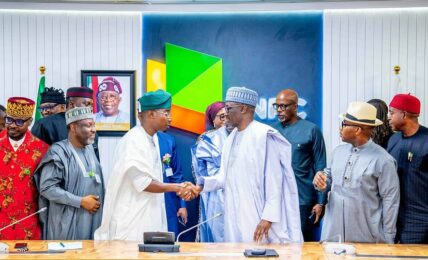
But as Nigerians and the International community celebrated General Tukur Buratai with a Public Presentation of a book by Dr MS Abubakar, a Scholar and Expert on Security Affairs, “Military Transformational leadership in action: the Buratai Era”, the well attended event draw the array of eminent Nigerians and friends of Nigeria, which included but not limited to Mr President, Asiwaju Bola Ahmed Tinubu GCFR, ably represented by the Secretary to the Government of the Federation, Senator George Akume, the Chairman of the Occasion, Alhaji Umar Mutallab, HRH, Muhammad Sanusi 11, the Emir of Kano and other Traditional Rulers like the Olowu of Kuta, HRN, Oba Adekunle Makama Oyelude, His Majesty, King Dr Lenu Tsaro Igbara, the Emir of Biu, HRH Alhaji Dr Mustapha Umar Mustapha 11 etc, the Minister of Defense, General CG Musa, the Chief Launcher of the Book, Alhaji Dahiru Manga, Senators Abdul Aziz Yar’Adua, Senator Ali Ndume, Hon Aminu Balele, our Service Chiefs, Retired and Serving Senior Officers, the Special Diplomatic Guest, Lt General Domenico Giani, former Corps Commander, Gendarmerie Corps of Vatican City, General Francis Awagbe Behanzin (rtd) and other members of the Diplomatic Community, the book reviewer, Major General I D Penap, Members of the 29 Regular Course, Family, Friends and Associates of the Honoree, Amb ( Lt General rtd ) Tukur Yusufu Buratai too numerous to mention both from Nigeria and outside the Country at the Nigerian Army Conference Center and Suite Asokoro, Abuja on Wednesday, 16th September 2026.
This is definitely an opportunity to do more than launch a book.
It is an opportunity to reflect on leadership in times of adversity.
It is an opportunity to honour the men and women of the Nigerian Army who made sacrifices in the service of the nation.
It is an opportunity to examine the lessons of military leadership, transformation and national service.
And, above all, it is an opportunity to say to a soldier who devoted decades to Nigeria:
Thank you for your service.
Thank you for your sacrifice.
Thank you for your leadership.
And thank you for believing that the Nigerian Army could be stronger, more professional, more innovative and better prepared to defend the sovereignty and territorial integrity of our great nation.
Ambassador ( Lieutenant General rtd ) Tukur Yusufu Buratai, CFR — Soldier’s Soldier, Commander, Strategist and Servant of Nigeria.
Nigeria honours your service.
“True transformational leadership is not measured only by the battles a commander fights, but by the institution he leaves stronger, the soldiers he inspires, and the nation he serves.”
Congratulations, Your Excellency, Ambassador (Lieutenant General rtd) Tukur Yusufu Buratai, CFR
May the lessons of the Buratai Era continue to inspire future generations of Nigerian military leaders and public servants.
Comrade Oladimeji Odeyemi contributed this article from Ibadan, Oyo State.